





Ehlers-Danlos syndrome (EDS) is a hereditary connective tissue disorder, and there are 13 different variants. Genetic mutations are known for 12 of them.
Overall, EDS is considered a rare disease, but there is a significant difference in how rare the types are. Hypermobile Ehlers-Danlos is considered the most common type, affecting approximately 1:3500-5000 individuals, while for some of the rarer types, as few as 23 patients have been diagnosed worldwide.
EDS causes defects in the collagen fibers of the patient, which is a protein that in healthy individuals constitutes 1/3 of all proteins in the body. Collagen is important for bones and cartilage, ensures that the skin remains elastic and firm, that wounds and scar tissue heal quickly and effectively, and ensures the stability of our blood vessels.
Overall, collagen is an extremely important protein in our bodies, but in people with EDS, collagen does not function in the same way as in healthy individuals.
Depending on the type of EDS one has, the symptoms may vary slightly. In most types, the classic symptoms are seen, such as hypermobility, hyperelasticity of the skin, poor wound healing, fragile and thin skin, and greater or lesser impact on the internal vital organs.
It can quickly sound severe when these symptoms are listed in this way - and it can indeed be. Some EDS patients will be severely affected, and others will be minimally affected. Again, it also depends on the type of syndrome one has.
One of the things that most Ehlers-Danlos patients are most bothered by, however, is that they struggle with chronic pain in joints and muscles, have hypermobile joints, and often experience that their joints simply luxate - meaning they dislocate.
In the section below, we would like to present a patient story, where Mathilde gives us insight into her life with Ehlers-Danlos, and how she manages her everyday life, despite massive continuous pain and reduced functional level. She is one of those who face huge challenges, and yet has a human surplus to share her experiences.
Life with Ehlers-Danlos syndrome: A patient story by Mathilde
Facts about Mathilde: Mathilde is a 22-year-old girl, blogger, nursing student, diagnosed with EDS in 2021.
Ehlers-Danlos is not a syndrome that can be cured, but fortunately, there are several things you can do to relieve your body, accept your syndrome, and learn to live a meaningful life anyway! And for that? Yes, I would like to share some of the experiences I have gained in my life with the rare type, Classical Ehlers-Danlos syndrome. So here are 3 things I wish I knew when I got my diagnosis!
Community
You are not alone! When I received my EDS diagnosis, I was filled with loneliness. I knew no one who understood my problems and felt truly wrong. So the first thing I did was look for communities where I could feel understood. The first thing I found was the Ehlers-Danlos Association. In addition, I became involved in Anonymous Citizens with Pain, which has departments for both adults and young people around the country. And I have also participated in events through the association Chronic Influencers. So when you feel alone in your everyday life with EDS? Yes, you could try to contact one of these three associations and create a network through them!
Help is available
When I received my diagnosis, the doctor concluded with: "Yes, and we can't do anything to help you, so you just have to learn to live with it!" And in a way, that's correct because there is no cure. But no cure does not mean that there is no help to be found! Due to my Ehlers-Danlos syndrome, I have received approval for free physiotherapy (i.e., without co-payment), approved subsidies for psychological therapy, approved SPS support for my education (in the form of online books, a sit-stand desk and an office chair for both home and education), approved assistive devices for the workplace, and much more. There are really many opportunities to get help in everyday life if there are things that are challenging! But you must remember to ask and speak up.
Brilliant assistive devices at Seniorpleje
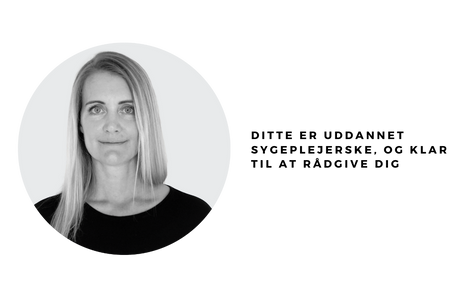
Although the possibility of getting help in everyday life exists, it is not always easy to get through, and it can demand a lot from one's already minimal energy. Therefore, a site like Seniorpleje is brilliant, filled with ingenious products that can relieve us in everyday life. In addition to a huge and unique selection of products, they also offer individual health professional guidance, as they have an experienced nurse (Ditte) to guide and advise customers. Here is a small selection of my favorite assistive devices:
The Bathroom

Showering and washing my hair is one of my biggest challenges in everyday life. But with assistive devices such as a hair washer, back scrubber, and a bath chair from Seniorpleje, it suddenly becomes much easier! You can read more about the products here:
https://seniorpleje.dk/collections/badevaerelset
The Kitchen

The kitchen is also a place where I struggle with my limitations. And here again, I can recommend acquiring various assistive devices to help with some of the most difficult tasks. For example, I experienced severe pain in my wrists when cutting meat and vegetables, which became SO much better after I acquired their fantastic ergonomic knives. Time and again, I couldn't open jam jars, soda bottles, and various canned goods, so a multi-opener was really a must-have on that front. And finally? Yes, many of us struggle with lifting heavy things. So maybe a tilting kettle is exactly what you need? It will definitely be my next purchase!
https://seniorpleje.dk/collections/kokkenet-1
Pressure-relieving cushions, mattress & lumbar belt

Back pain is something I also struggle with a lot as a result of my EDS. And I know that many of you unfortunately do too. It is extremely bothersome and limiting, which is why I use a good soft seat cushion, as well as a lumbar belt like this, which helps to provide extra stability.

In addition, I have a wonderful alternating pressure mattress that is easy to take with me when I stay overnight elsewhere. I have an Elviros pillow and a cooling cap/migraine mask to prevent and relieve migraines and tension headaches.
These simple measures, such as finding a network and acquiring the help you can, are important for learning to accept that you are ill. And even though it may seem completely logical, I personally experienced that I needed a little push before I dared to embark on it. Because it can be overwhelming, and as much as it benefits you, it can also be difficult. Because it requires you to accept and acknowledge that life did not turn out as expected. But my experience? Yes, it is that even though it is hard to have a chronic illness, life with Ehlers-Danlos can still be quite wonderful.
Hugs from Mathilde
___________________

As something entirely new, in March 2022, we entered into a collaboration with the Ehlers-Danlos Association, where we exchange experiences, offer online thematic presentations, sponsorship gifts, and offer the association's members a superb discount scheme when they shop at Seniorpleje.
You can find the Ehlers-Danlos Association by clicking HERE!
- If you need personal guidance in finding the right assistive devices, we are always ready to advise you. Discretion is a matter of course!
Best wishes from Ditte & the Seniorpleje team.
Ditte Okkels Alici,
Nurse & owner
ditte@seniorpleje.dk
www.seniorpleje.dk
Mobile: 40563841